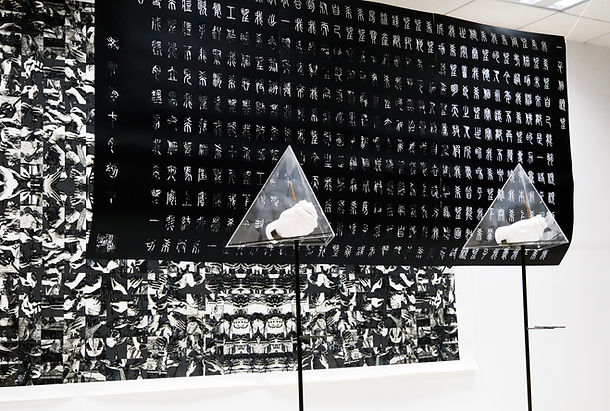
One Thousand Wishes
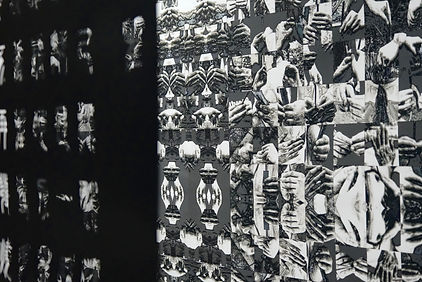
Photography on canvas, installation
240cm*180cm*300cm
Today, many young people live with a strong sense of uncertainty and anxiety about the future. As technology develops and society changes at increasing speed, industries, professions and life paths are constantly being reshaped. The idea of being “motivated” or “ambitious” has become almost compulsory. Young people are expected to keep improving themselves, to remain competitive, and to believe that effort will eventually lead to stability.
However, behind this pursuit of progress there is often a heavy burden of pressure, exhaustion and disappointment. When hard work no longer guarantees a clear future, ambition can begin to feel fragile. For some young people, this uncertainty leads not simply to passivity, but to the search for another kind of support. Burning incense has become one such gesture.
In this context, burning incense is no longer only a religious contract made before a deity. It becomes a personal way of managing risk, anxiety and helplessness. It is a ritual through which individuals project their hopes onto an uncertain future, seeking luck as a way to regain a sense of control over life. In a vast and unpredictable age, each person faces countless variables beyond their control. Social rules are often unclear, opportunities are uneven, and success can feel dependent on forces that are difficult to see or understand.
Yet this does not mean that the individual is powerless. The act of burning incense reveals a contradiction within contemporary life: people know that luck cannot replace action, but they still need a symbolic space in which fear, desire and hope can be placed. It reflects not superstition alone, but a deeper emotional structure shaped by pressure, competition and the need to believe that one’s future has not been completely closed.
如今,许多年轻人都生活在强烈的不确定性与对未来的焦虑之中。随着科技发展和社会变化不断加速,行业、职业和人生路径都在持续被重塑。“上进”或“努力”几乎变成了一种必须履行的要求。年轻人被期待不断提升自己、保持竞争力,并相信只要足够努力,最终就能换来某种稳定的未来。
然而,在这种对进步的追求背后,往往伴随着沉重的压力、疲惫和失望。当努力不再能够保证一个清晰的未来时,上进本身也开始变得脆弱。对一些年轻人来说,这种不确定性并不只是导致消极或放弃,也会促使他们寻找另一种支撑方式。上香,便成为其中一种姿态。
在这样的语境中,上香不再只是人在神明面前订立某种宗教契约。它更像是一种个人面对风险、焦虑和无力感时的处理方式。通过这一仪式,个体把对未来的愿望投射出去,借由祈求好运来重新获得一点对生活的掌控感。在这个庞大而难以预测的时代,每个人都面对着大量不可控的变量。社会规则常常并不透明,机会分配并不均等,而成功有时也像是取决于一些难以看见或理解的力量。
但这并不意味着个体毫无能动性。年轻人上香所呈现出的,正是当代生活中的一种矛盾:人们知道运气无法替代行动,却仍然需要一个象征性的空间,去安放恐惧、欲望和希望。它所反映的并不只是迷信,而是一种更深层的情感结构,一种由压力、竞争和对未来仍未彻底关闭的信念共同塑造出来的心理状态。